Julia Healey, President and CEO, United Charitable. Julia shares stories of donors whose values and choices are shaping lasting charitable impact.
Sometimes the most meaningful charitable impact begins with something incredibly small.
In this case, it began with a homework assignment.
A Calvin University professor was teaching a screenwriting class inside a Michigan correctional facility when one of his students turned in a screenplay that stayed with him. The story centered on a seven-year-old girl named Tina and was written with a sensitivity, perspective, and emotional clarity the professor had not expected to find.
He believed it was as strong as anything he had seen come out of a traditional film school.
And because one person believed the story deserved a wider audience, a remarkable chain reaction began.
What followed is a story about talent, generosity, storytelling, and what can happen when the right people choose to say yes.
The Call That Connected Three People
The professor went looking for a Detroit-based filmmaker who could help bring the screenplay to life. He found Christine Swanson, a Hollywood and television director who grew up in Detroit and built her career in Los Angeles.
Christine read the script and felt an immediate connection.
“I saw reflections of myself and my own family,” she said.
She does not typically take on small-budget productions. Her world is Hollywood. But this story felt different. She described it as a tap on the shoulder, and she began reaching out to her network to see if she could raise enough support to make the film with the care it deserved.
A mutual friend sent a one-line email to Dan Wright, who holds a Donor Advised Fund at United Charitable and had been directing his giving toward causes rooted in purpose, resilience, and community healing.
The email said: this may have your name on it.
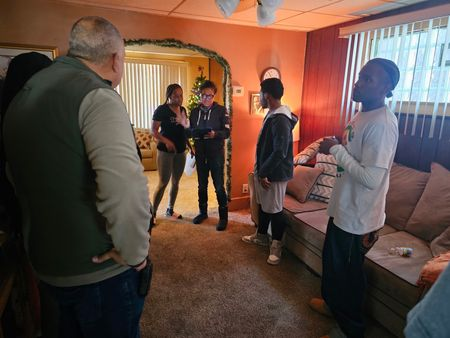
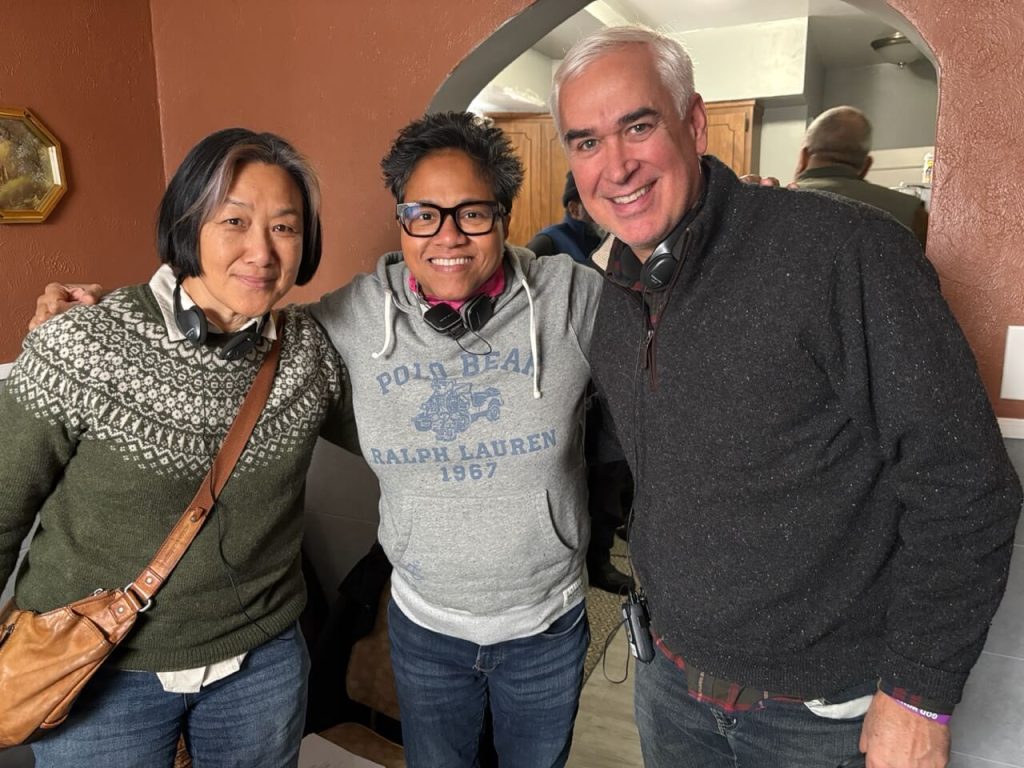
Dan and his wife Guowei read the project overview. They immediately recognized themes that mattered deeply to them. They asked to learn more, and by December they were in Detroit, on set, watching Christine and her team bring the screenplay to life.
Dan recommended a grant from his Donor Advised Fund at United Charitable to help support the project at Wedgwood Circle Institute.
A Story That Opens Doors
Tina is seven years old. The film follows the small, quiet moments of her daily life and the way those moments can shape a child’s understanding of herself and the world around her.
The screenplay does not shout its message. It does something more powerful. It invites the viewer to pay attention.
The man who wrote Tina’s story is Kyale, a young man with a rare gift for seeing through the eyes of a child and translating that perspective onto the page. What began as a class assignment became something much larger: a story with the power to create empathy, conversation, and understanding.
“It was just a creative outpouring of storytelling,” Christine said. “And that’s what I connected with.”
For Christine, that is the power of film. It can reach people in ways that lectures, statistics, and arguments often cannot.
“You don’t have to be from this background,” she said. “A story is a story, and if you’re willing to engage with it, there is the possibility that the story will engage with you.”
That is what makes this project so compelling. It is not only about one screenplay becoming one film. It is about what storytelling can unlock when people are willing to listen.
What Fuels Dan’s Giving
Dan believes generosity should create momentum.
After selling his company three years ago, he and Guowei came to United Charitable to establish a Donor Advised Fund and give with more intention. They wanted their giving to be personal, thoughtful, and connected to work that could create lasting change.
Their own life experience helped shape that purpose.
Dan and Guowei’s daughter Margaret was 23 years old and teaching kindergarten in an underserved community in Washington, D.C., at Cornerstone Christian School, when she died suddenly of an epileptic seizure, just one day after her birthday. That loss changed their lives. It also deepened their commitment to helping others build resilience, find support, and move forward with hope.
“Rather than the pain of that destroying us,” Dan said, “God’s comfort and strength have actually helped turn the pain into fuel to motivate us.”
In the years since, Dan has built relationships in places and communities many people never encounter. He has spent time inside maximum security prisons, helped develop programs, and formed friendships with people whose lives have been transformed through second chances.
He often explains resilience with a simple image: the difference between a tennis ball and a raw egg. Throw a tennis ball to the ground and it bounces back. Drop an egg, and it breaks.
What Dan wants to help build, especially for young people and people facing difficult circumstances, is the capacity to bounce.
“There are too many people getting splattered,” he said, “and we want to help them become resilient.”
That is why this film mattered to him. He saw more than a creative project. He saw a chance to support a story that could open doors, start conversations, and help people see one another with more compassion.
What Is Already Growing From This
The project has already created connections no one could have predicted.
Christine went to Sundance in January and attended a justice summit focused on storytelling and second chances. There, she met the founder of the San Quentin Film Festival, the first film festival held inside a prison. That connection led to an invitation for Christine to serve as a judge for an upcoming festival at a women’s prison under the same organization.
Before Kyale’s screenplay, Christine had not been part of this world. The project opened a door.
Meanwhile, Dan is working with a team that includes a traumatologist and a curriculum specialist to pilot an eight-week video-based certification program on resilience inside a maximum security prison in Lansing, Kansas. If the pilot goes as planned, the program will expand statewide, then nationally.
And Kyale has already written a feature-length version of the same story.
Christine has read it. She calls him a genius. She and Dan are already talking about how to support the next chapter in the same spirit as the short film: through donated dollars, outside the pressure of a studio system, and with a focus on dialogue, healing, and human connection.
“I know how to do it,” Christine said. “We just need more dollars.”
What a Gift Here Makes Possible
The short film is in editing now and is expected to be ready for the festival circuit this summer. What comes after the film may be just as important as the film itself.
Additional support can help fund screenings, community conversations, advocacy opportunities, educational programs, and the infrastructure needed to help this work reach more people.
There is a kind of math to generosity that does not always follow a straight line.
One professor believes in a student’s screenplay. One filmmaker agrees to bring it to life. One donor sees the possibility. One film creates new conversations. One conversation opens the door to a festival, a program, a partnership, or a new way of seeing another person.
Dan describes that kind of impact as exponential, and this project is already proving him right.
For anyone looking for a place where a gift can become more than a transaction, this is it. A gift here becomes part of a story that keeps moving.
United Charitable is a 501(c)(3) nonprofit organization. Contributions are tax-deductible to the extent allowed by law. This information is educational and is not tax or legal advice; consult your own tax or legal advisor.